


Why brand experiences matter more than ever in the AI era
After all, you can't deepfake how it felt to be there.
AI has transformed marketing faster than any force in recent memory. And while there are undeniable positives, there is also huge anxiety around what this means for job security, authorship, and originality. Yet something more fundamental is also shifting: consumer trust.
Not trust as a vague sentiment, but trust as a practical decision-making tool. Who do I believe? What do I count as real?
Recent data from Digital Applied reveals that when consumers perceive an ad as AI-generated, their purchase intent drops by 14%, and premium perception of the brand falls by 17%. Meanwhile, a survey last year by Raptive showed a 14% drop in purchase consideration and willingness to pay a premium for products advertised alongside content perceived as AI-made.
This clearly has implications for how brands show up, which is why, when digital trust is wobbling, the most compelling thing a brand can do is invite you to experience its world in person.
The credibility gap
Few examples illustrate the trust problem we’re facing more than what recently happened to British financial expert Martin Lewis. Over the past year, Lewis has been repeatedly impersonated in AI-generated scam ads promoting fake cryptocurrency schemes. Lewis has had to issue repeated public denials and warnings (ironically on videos hosted by the same big-name platforms showing the scam ads). Just a couple of weeks ago he alerted the public to yet another bogus YouTube video featuring his face.
The damage isn’t just potentially reputational for Lewis, and obviously awful for those scammed, it’s cumulative. People become less willing to take anything at face value. And when even the White House is openly circulating AI-manipulated imagery, it gives fake content a legitimacy that is hard to push back against.
It’s not a leap to assume that in-person experiences stand to gain exponentially from this. EventTrack’s 2025 data reported 66% of consumers saying they’re more likely to purchase products after engaging with branded event experiences, while Nielsen continues to find that recommendations from people we know are trusted far more than any form of paid media.
Seeing and hearing someone in person still carries a basic assumption of authenticity (unless they’re a hologram or a lookalike, of course) and the same applies to companies. That doesn’t make experiential marketing a magic solve-all, of course, but it does give it a different role. It opens up both a primary and a secondary audience – an active primary audience who were there themselves, and then a secondary observer audience who view their content or hear their first-hand accounts.

.jpeg)

.jpeg)
Real experiences don’t carry the same burden of (dis)trust
One of the enduring advantages of physical experiences is context control. When a brand meets people in the real world, there’s no algorithm deciding what sits next to its message.
Participation creates memories, not just awareness – and memory is harder to dismiss than a pithy tagline. That doesn’t mean experiential is immune to deception, of course. Astroturfing, paid crowds, staged moments, and manufactured virality all predate the rise of AI. An event existing doesn’t automatically make the content that comes out of it trustworthy. Photos and videos can be manipulated and narratives can be spun.
The difference is timing, scale and texture. You can’t fake how people feel while they’re there in the moment, how they engage; and whether hundreds of people independently share slightly different versions of the same moment, in real time, with all the inconsistency that real human experience brings.
The messiness of reality carries more credibility than ever now – not because aspects are impossible to fake, but because it’s harder to fabricate at scale without cracks showing. Which is precisely why badly executed brand experiences don’t just underperform, they actively backfire. People expect better.
Presence as proof
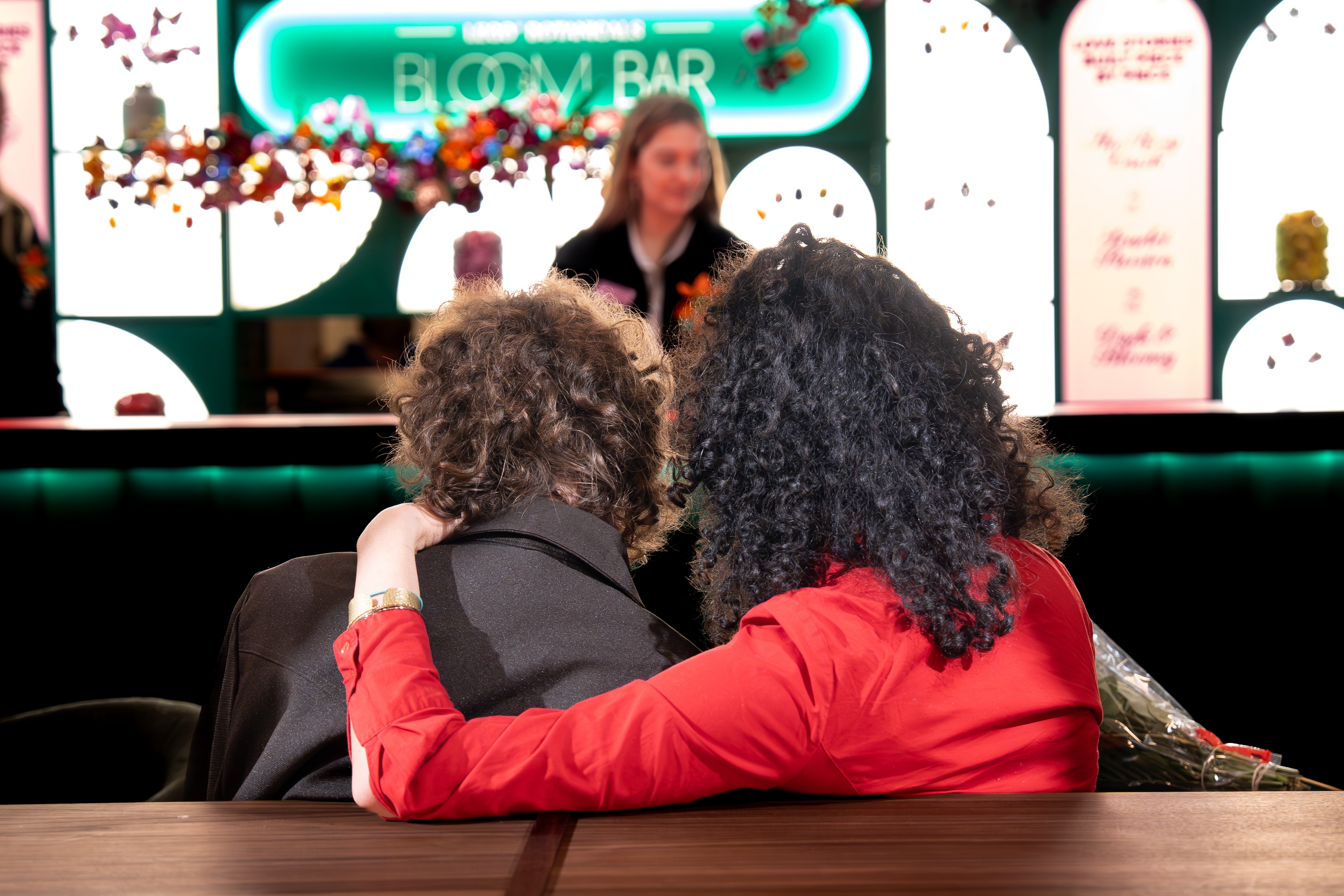
The future isn’t experiential versus digital, it’s experiential feeding digital. The physical moment becomes the proof point and digital extends its life. The experience is the content maker. They can work together – but the online content will have a legitimacy based upon a real event, and so starts from a more authentic baseline. Our recent LEGO® Botanicals Bloom Bar event in Amsterdam over Valentine’s weekend proved this, with over 658,000 social impressions generated without a single paid placement.
The things brands can easily fake are losing value. The things that are harder to scam – real interactions, shared moments, and physical presence – are gaining it. The smartest strategies won’t abandon digital, they’ll integrate it with real-world credibility. Experience will become the source of trust, with digital acting as the multiplier. Because, while almost anything can be generated, simulated, or optimised nowadays, you still can’t deepfake how it felt to be there.